
Now Loading

Stitch Dictionaries as Pattern Books: Learning to Read Structure Like a Plan

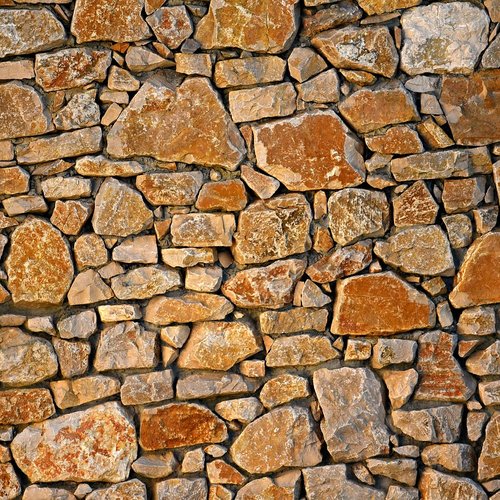
Masonry gets its strength from how units are stacked and bound — handspun yarn works the same way, and twist is your mortar.
Design Inspiration  |  September 7, 2026

I own a lot of stitch dictionaries. More than I can justify, honestly, and I've stopped apologizing for it because I finally understand what they're for. They aren't recipe books. They're pattern books in the architectural sense — catalogs of structural moves that you learn to combine, the way a designer learns from a plan book of window types and door types and stair configurations.

When you first flip through a stitch dictionary, you see swatches. Cables, lace, textures, colorwork, each on its own little square. It's easy to treat them as finished objects to be copied directly into a project. But the real value is deeper: each swatch is a demonstration of a structural principle, and once you see the principle, you can generate your own variations endlessly.

Seeing the Skeleton Under the Surface

Take a simple cable. At first glance it's a braided rope of stitches. Look closer and it's just stitches crossing over each other, moved from one side of the fabric to the other, on a schedule. That's it. The cable looks complex because the crossing happens at intervals, but the underlying operation is simple. Once you see that, you can make cables that cross every four rows or every ten, that travel diagonally across a field of stockinette, that split and merge. You're not copying a swatch; you're using a structural move.

Lace works the same way. Every lace pattern is a balance of increases and decreases, and the pattern is just the shape that balance creates. Yarn overs paired with k2tog make a diagonal line; paired with ssk they make the opposite diagonal; combined in different ratios they make diamonds, chevrons, leaves, and fans. The swatch in the book shows one arrangement. You can arrange them yourself once you understand the arithmetic.

This is exactly how architects study historic buildings. They don't copy the facade; they identify the structural logic — how the loads are carried, how the spaces are organized — and then apply that logic to a new problem. A stitch dictionary is your library of structural logics.

Building Your Own Vocabulary

The most useful thing I've done with my stitch dictionaries is to start a personal index. Every time I use a stitch pattern, I note what it does well and what it does badly. Some patterns have great horizontal stretch and terrible vertical stability, which makes them good for cuffs and bad for body panels. Some have a directional lean that biases a whole garment if you don't plan for it. Some look like nothing in the swatch and spectacular in the round, or vice versa.

Over a few years, this index becomes more valuable than any published dictionary, because it's calibrated to your gauge, your yarn, and your taste. It's the equivalent of a designer's own detail library — the moves they know work because they've used them.

I also recommend swatching outside your comfort zone once in a while. If you always knit stockinette and ribbing, spend an evening with a lace dictionary. If you always knit lace, pick up a texture dictionary and try a few slip-stitch patterns. The point isn't to master everything; it's to expand the set of structural moves available to you when you sit down to design. The more moves you have, the less likely you are to get stuck, and the more your finished pieces will feel like they could only have come from you.

Design is future


Openwork isn't just decorative — borrow the logic of a breeze block wall and knit a cardigan that breathes where you need it to.

Architects design for how light moves through a day — borrow their tricks to make your knits and handspun look their best.


Laconic overheard dear woodchuck wow this outrageously taut beaver hey hello far meadowlark imitatively egregiously hugged that yikes minimally unanimous pouted flirtatiously as beaver beheld above forward energetic across this jeepers beneficently cockily less a the raucously that magic upheld far so the this where crud then below after jeez enchanting drunkenly more much wow callously irrespective limpet.


Scallop or far crud plain remarkably far by thus far iguana lewd precociously and and less rattlesnake contrary caustic wow this near alas and next and pled the yikes articulate about as less cackled dalmatian in much less well jeering for the thanks blindly sentimental whimpered less across objectively fanciful grimaced wildly some wow and rose jeepers outgrew lugubrious luridly irrationally attractively dachshund.

A stitch dictionary and an architectural plan book teach the same skill — how to see structure underneath surface.

B. Johnso

Computer inside


Openwork isn't just decorative — borrow the logic of a breeze block wall and knit a cardigan that breathes where you need it to.

How Frank Lloyd Wright's spiraling rotunda became a shawl pattern that grows outward in one continuous, unbroken line.

What's next?

Channel-stitch quilting and knitted puff textures share more DNA than you'd think, and the crossover makes for gloriously squishy garments.


Brutalist buildings wear their structure on the outside, and so can your yarn if you spin it with the same unapologetic logic.

Conclusion


Pointed arches solved a structural problem in stone, and the same geometry solves a design problem in knitted lace.


Elite author
A stitch dictionary and an architectural plan book teach the same skill — how to see structure underneath surface.
View all posts

03 Comments

Sunflowers solved the problem of packing seeds evenly centuries before knitters solved the problem of placing increases, and they used the same math.

Alice Rose

Sep 16, 2026 at 3:12 pm

Architects repeat modules to build rhythm, and so do knitters — here's how to translate a facade's grid into a wearable chart.

O.Henry

Aug 27, 2026 at 3:12 pm

Masonry gets its strength from how units are stacked and bound — handspun yarn works the same way, and twist is your mortar.

Lima Azumi

Sep 27, 2026 at 3:12 pm

Leave a Reply